Another Once Upon a Time in Jerusalem – and this time, Tabor House
A building without which it’s difficult to fully grasp the charm and diversity of Jerusalem as it expanded beyond the Old City walls.
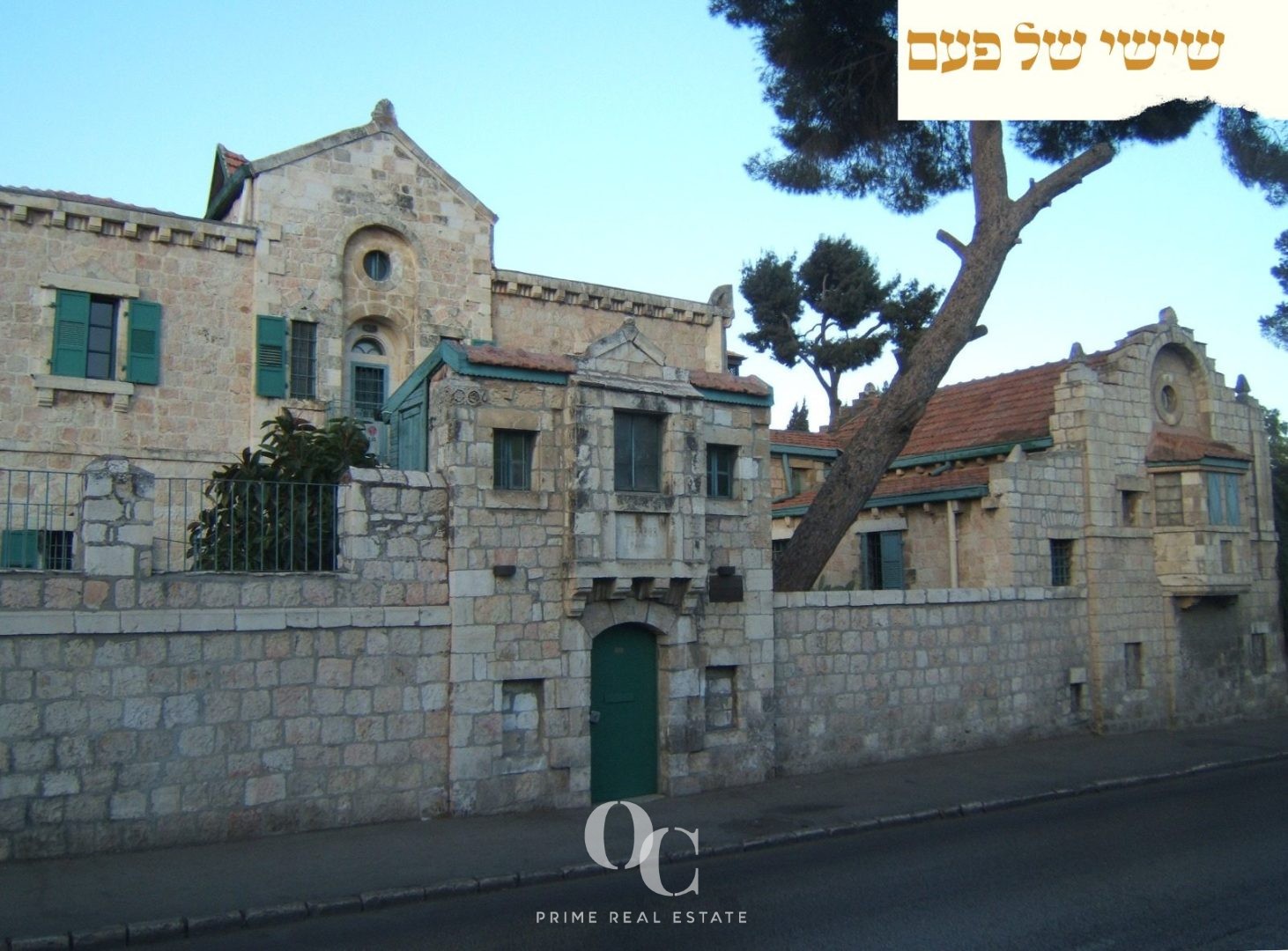
Tabor House is an extraordinary architectural gem located at 58 HaNevi’im Street, a street that attracted many of Jerusalem’s most prominent residents during the 19th century.
The year is 1882.
Conrad Schick, a German archaeologist, architect, and one of Jerusalem’s leading researchers of the time, purchases a plot of land and decides to build his dream home for himself and his family. Schick, a man who lived and breathed Jerusalem, designed what was essentially a magnificent miniature Jerusalem fortress.
He brilliantly combined solid German construction techniques with Eastern architecture, arches, and Islamic motifs. At the entrance, he designed an impressive stone gateway, and his meticulous attention to detail is evident everywhere – from the stone passageways and inner courtyards to the lush landscaping surrounding the structure.
Above the entrance, Schick carved the word “TABOR” into the stone, inspired by a verse from the Book of Tehilim, thus giving the house the name by which it is still known today.
Even upon its completion in 1889, the building was considered a pioneering example of eclectic architecture, reflecting both Schick’s spiritual world and the practical needs of family life in a rapidly developing city.
Over the years, and following Schick’s death in 1901, the building underwent many transformations.
During World War I, it was requisitioned by the Ottoman authorities and used as quarters for Turkish officers.
Following the British conquest of Jerusalem, the building experienced further changes. During Israel’s War of Independence, it came under Israeli control and housed Jewish refugees who had fled the Jewish Quarter of the Old City.
In subsequent years, the property was leased to various organizations. In 1951, it was leased to the Swedish Church, which eventually purchased it in 1996.
Today, the building is home to the Swedish Theological Institute, where young Scandinavians – often fair-skinned and sunburned from the Middle Eastern sun – study the Land of Israel, Judaism, and the Hebrew language.
The property is a beautiful, well-maintained, and pastoral compound whose thick walls preserve the echoes of history and the legacy of a man who helped shape large parts of Jerusalem’s physical landscape while making important archaeological discoveries throughout the city.
In Jerusalem, buildings and real estate are measured not only by the quality of their construction but also by the historical stories embedded within their foundations. The connection between the city’s architectural heritage and a love for the Eternal City serves as a reminder that every stone in Jerusalem carries a story, a memory, and a soul of its own.
Teddy Kollek, Jerusalem’s legendary mayor, once said regarding Tabor House:
“If I could choose one house in Jerusalem to live in, this is the house I would choose.”
Conrad Schick, a committed Protestant, built this private residence for himself and his family as a place from which to live and gaze upon the city he dedicated his life to studying.
The Germans, the Ottomans, and the British have long since left Jerusalem, but they left behind an architectural landmark that continues to grace HaNevi’im Street and reminds us that in Jerusalem, every person who builds a home is, in a sense, building a piece of history for all of us.
Shabbat Shalom from Jerusalem, to those near and far.
Photo credit: Wikimedia Commons