Another Once Upon a Time in Jerusalem,
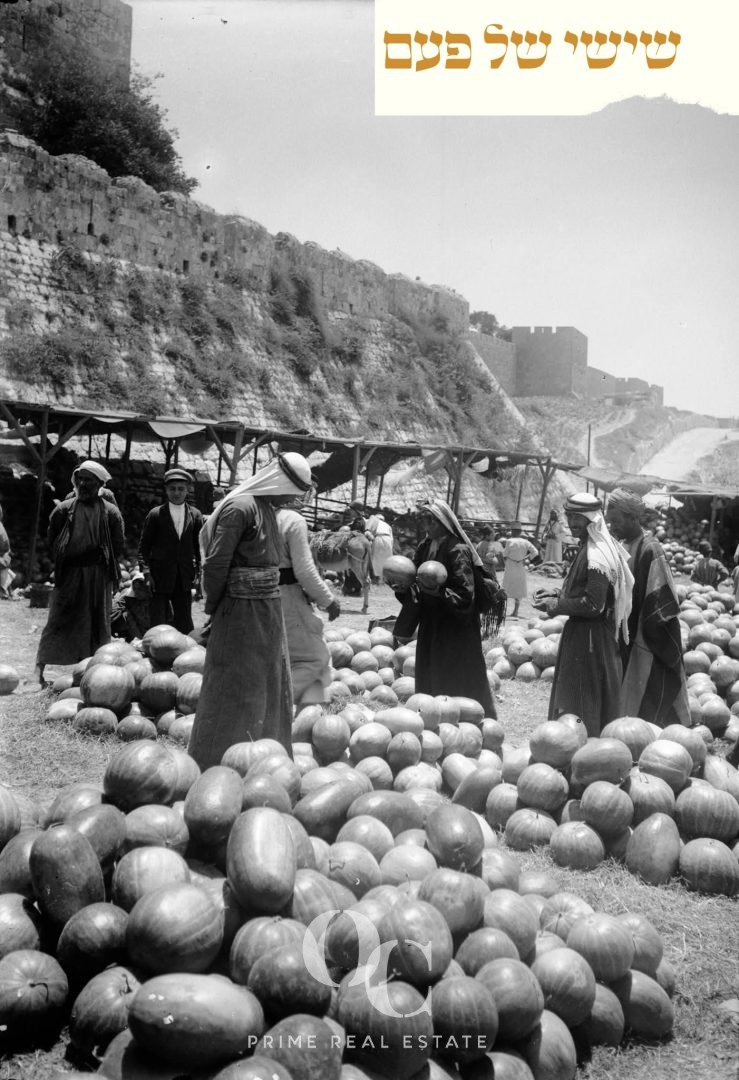
And this time – The watermelon market in Jerusalem at the foot of the Tower of David, around the year 1900.
In the photograph, you can see the watermelon market during the Ottoman period, when the Turks ruled the land for nearly 400 years with interruption, until the British conquest of Palestine in 1917.
Since then, only the donkeys have remained.
The watermelon market was part of a larger marketplace that developed as people began moving beyond the walls of the Old City. Alongside the watermelon stalls were vendors selling soap, grain, and locally produced oils, as well as imported goods that arrived by ship through the Port of Jaffa.
Later, during the British Mandate, more organized and hygienic markets were built in the nearby neighborhood of Mamilla.
As Jerusalem children, many years later, we would spend summer nights visiting the watermelon stalls that had moved to the area opposite Damascus Gate, where they sold red, juicy watermelons full of seeds.
At first, the stalls operated from horse-drawn carts.
Later, with progress and technology, open Peugeot pickup trucks arrived – or, as they were called in East Jerusalem, “Bijou.” For the more advanced vendors, there were Volkswagen pickups with two seats and an open cargo bed in the back. These trucks carried sheep, goats, watermelons, furniture, scrap collections, and enough people to fill a bus. Sometimes, in true “free-style” fashion, they carried all of those things together in the same truck bed.
There were hot bagels sprinkled with za’atar wrapped in newspaper, giant falafels swimming in oil whose final resting place remained a mystery, and on cold Jerusalem winter nights, steaming cups of sahlab.
At the sahlab shop, an old television with rabbit-ear antennas played an Arabic movie on an endless loop, receiving a flickering signal from Jordan. Arabic songs crackled through a loudspeaker that had clearly seen better days.
Dozens of decorated white Ford Transit vans, powered by diesel engines and emitting smoke like the chimney of a coal ship, arrived packed with passengers from East Jerusalem in numbers that would not have embarrassed a bus in New Delhi.
During the 1970s and 1980s, this was one of the main gathering places for teenagers on Friday nights, Saturdays, and throughout the week.
We would wander for hours through the market inside the Old City, with its streets and alleyways lined with shops selling Adidas sneakers with four stripes, “MBA” basketball shoes – the upgraded version of NBA shoes, of course – and baggy trousers for the laid-back crowd who seemed to have forgotten what shampoo was.
There was Turkish coffee brewed in a finjan and fresh baklava dripping with sugar syrup.
We walked around freely, without police, soldiers, or any sense of fear. It was as carefree as strolling through a modern shopping mall.
Those who were there understand.
Those who weren’t probably never will. But that is truly how it was.
Since then, much murky water has flowed under the bridge and blood.
A great deal of blood.
Nothing has remained the way it once was.
That was the Jerusalem of our childhood.
Shabbat Shalom from Jerusalem, to those near and far.
Credit – Matson Collection