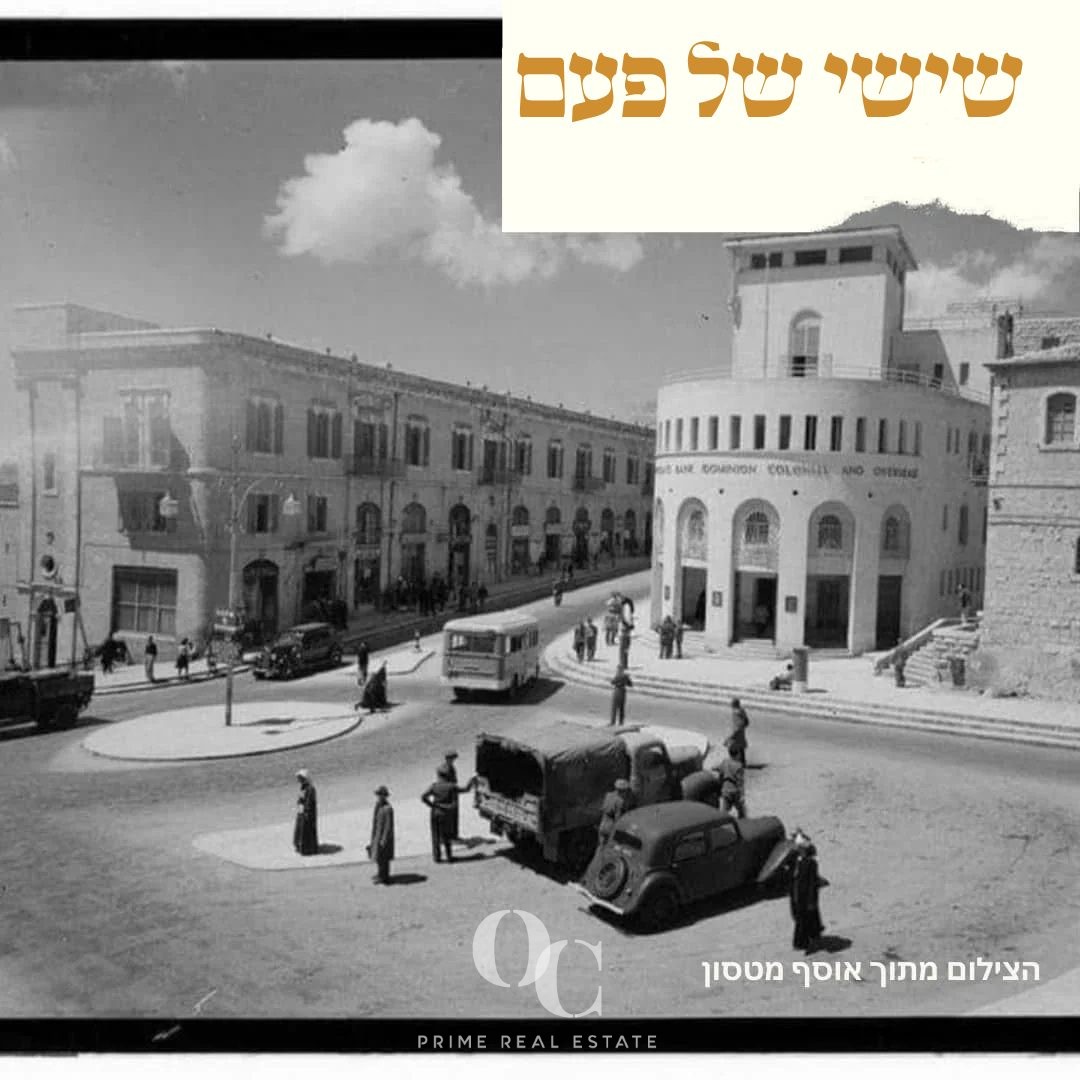
Another Once Upon a Time in Jerusalem – and this time, IDF Square (Kikar Tzahal), circa 1940.
IDF Square is located at the intersection of Jaffa Road and King Solomon Street, just outside Jaffa Gate and the New Gate.
The square developed as part of Jerusalem’s expansion beyond the walls of the Old City in the mid-19th century during the Ottoman period. It became the meeting point of the major roads leading to Jerusalem-Jaffa Road (today’s Jaffa Street), the Chevron Road, the route to Jericho, the road to Nablus, and the road to Gaza.
After all, every road leads to Jerusalem.
As the city expanded beyond its walls, European Christian powers began constructing churches and monasteries around the Old City, while donkey carts and pedestrians filled these busy routes.
Later, the Ottoman authorities built the city’s post office next to the square, and it became known as Post Office Square.
It’s very possible that mail arrived faster during the Ottoman era than it does today.
Following the end of Ottoman rule and the British conquest of the country under General Edmund Allenby, the British built a new clock tower in the square in 1924, replacing the Ottoman clock tower that had previously stood above nearby Jaffa Gate.
The square was then renamed Allenby Square, leaving yet another foreign ruler’s mark on Jerusalem.
In 1930, Jerusalem’s new City Hall was built beside the square, with a branch of the British Barclays Bank occupying its southern façade facing the plaza.
It’s hard to imagine today, but ninety years ago you could walk into a bank in Jerusalem, approach a stern English clerk, receive your account balance in a heavy British accent, and perhaps even enjoy an afternoon cup of tea-in the middle of a scorching August day in the Levant.
In 1934, the British dismantled the new clock tower, claiming it obstructed traffic.
Small hotels and modest inns were also established around the square to accommodate pilgrims visiting the Holy Land.
When the British Mandate ended and Israel’s War of Independence began, the square became part of the new border between West Jerusalem and the Old City to the east. The dividing line ran directly through the square.
Landmines were laid throughout the area, and a curved concrete barrier was built to protect the Jewish population from Jordanian snipers positioned behind the cracks of the Old City’s walls.
City Hall remained in operation, while observation posts and defensive positions for the Israel Defense Forces were established on its roof and on nearby buildings overlooking the border.
City Hall employees became reluctant heroes, carrying on with their work on the front lines and taking coffee breaks beneath the sound of bullets shooting in from the Jordanian side.
Who would dare complain about delays in receiving a building permit from a clerk working under sniper fire?
Visitors today can still spot bullet marks on some of the surrounding buildings.
Fifty-six years ago, Jerusalem was reunited during the Six-Day War.
The square received its final and lasting name: IDF Square.
The concrete protective wall was removed, the buildings that had been constructed along the Jordanian side of the Old City walls were demolished, creating the promenade that now connects the square to Jaffa Gate, and the ancient walls themselves were carefully restored.
Once again, the square became one of Jerusalem’s main transportation hubs and the gateway between the Old City and the modern city.
In 2005, an underground tunnel was completed beneath the square, connecting traffic from Damascus Gate to Jaffa Gate.
The square was redesigned under the direction of renowned architect Moshe Safdie and later became part of the infrastructure for Jerusalem’s Light Rail, which began operating through the square in 2011.
This is our Jerusalem.
Today, the Light Rail glides through a square where there is no longer a clock tower, no landmines, no Jordanian snipers, no donkey carts, and no stern British bank clerks speaking with heavy English accents.
Only the traffic jams remain.
Wishing a Shabbat Shalom to those far and near, from Jerusalem. ❤️
Photo courtesy of the Matson Collection.