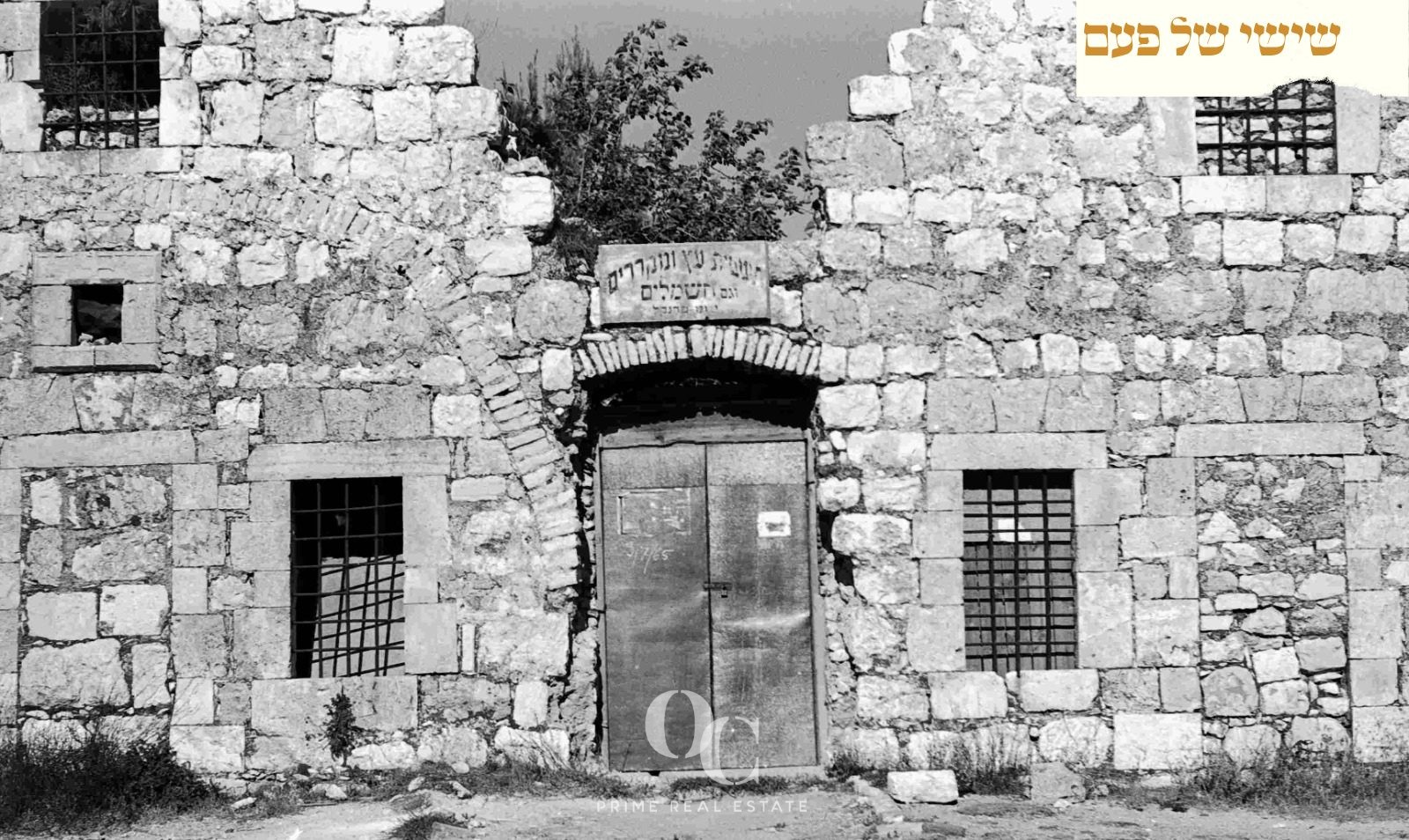
The Façade of the Khan Building in Jerusalem, 1965 – Another Once Upon a Time in Jerusalem
Just a few steps from the old Mandate-era railway station stands an impressive stone structure, wrapped in arches and steeped in mystery -the Khan building. For anyone who appreciates architecture and the social history of the city, the Khan is a masterpiece of preservation, continuity, and the timeless spirit of Jerusalem.
The Khan was built in the late 19th century, during the Ottoman period, as a classic caravanserai (khan) designed to serve travelers, pilgrims, and merchants arriving at the gates of the city.
Its location was no coincidence. Situated near the historic Hebron Road, it served Jewish visitors leaving Jerusalem on their way to Rachel’s Tomb and the Cave of the Patriarchs, Christian pilgrims traveling to the Church of the Nativity in Bethlehem, and later those arriving in the city at the end of their journey directly from the railway station inaugurated in 1892.
The opening of the railway line transformed the entire area into Jerusalem’s main and most dynamic gateway, and the Khan stood there sturdy and steadfast to welcome those who arrived.
Architecturally, the building embodies the splendor of traditional Mediterranean construction: a spacious central courtyard surrounded by wings, vaulted ceilings and cross-vaulted arches, and exceptionally thick stone walls providing perfect insulation from Jerusalem’s scorching summers and freezing winters. Every stone here was carefully cut and fitted, telling the story of an era when construction moved at a different pace, a pace marked by respect for materials and for time itself.
The Khan was a place where the noise of the modern railway met the quiet of caravan traffic.
Here merchants struck deals, and here Jerusalem began opening itself to the world beyond its walls.
Over the years, the Khan assumed many different roles.
With the decline of the Ottoman Empire and the arrival of the British Mandate, the building served as a light industrial complex, warehouses, and even a carpentry workshop. Yet its true charm refused to disappear.
The social energy that had characterized it as a meeting place in the 19th century began to pulse again in the 1960s, when a group of artists and visionaries (with the support of the legendary mayor Teddy Kollek) recognized the potential of the space and transformed it into the Khan Theatre – the creative repertory theater of Jerusalem.
In the photograph: The abandoned Khan façade, bearing a sign reading “Wood and Refrigeration Industry, Including Electrical Appliances,” belonging to the Frankel family, photographed in 1965, just before new life was breathed into it as a home for Jerusalem’s theater and cultural scene.
Its transformation from a historic caravanserai for horses and camels into a modern cultural center is a model example of adaptive reuse and architectural preservation.
The romantic spaces, exposed arches, and central courtyard became a living stage set, lending every event a sense of historical depth and emotional resonance unlike any other.
In later years, the Khan became a well-known Jerusalem entertainment venue centered around the courtyard, which housed a bar and café. In the early 1990s, it also served as a dance club open to Jerusalem’s young secular community, back when there were still tens of thousands of them.
Those were the days.
The combination of meticulous preservation and modern functionality is the secret and the magic that the historic neighborhoods of Jerusalem continue to offer their residents today. The Khan remains living testimony to the fact that quality architecture and historic buildings of real value never grow old.
They simply improve with time, providing a sense of perspective, an awareness of continuing history, and inspiration and continuity for future generations.
Shabbat Shalom from Jerusalem, to those near and far.
The photographer is unknown to me.